From living in her head to trusting herself, her body and what comes next 🦋
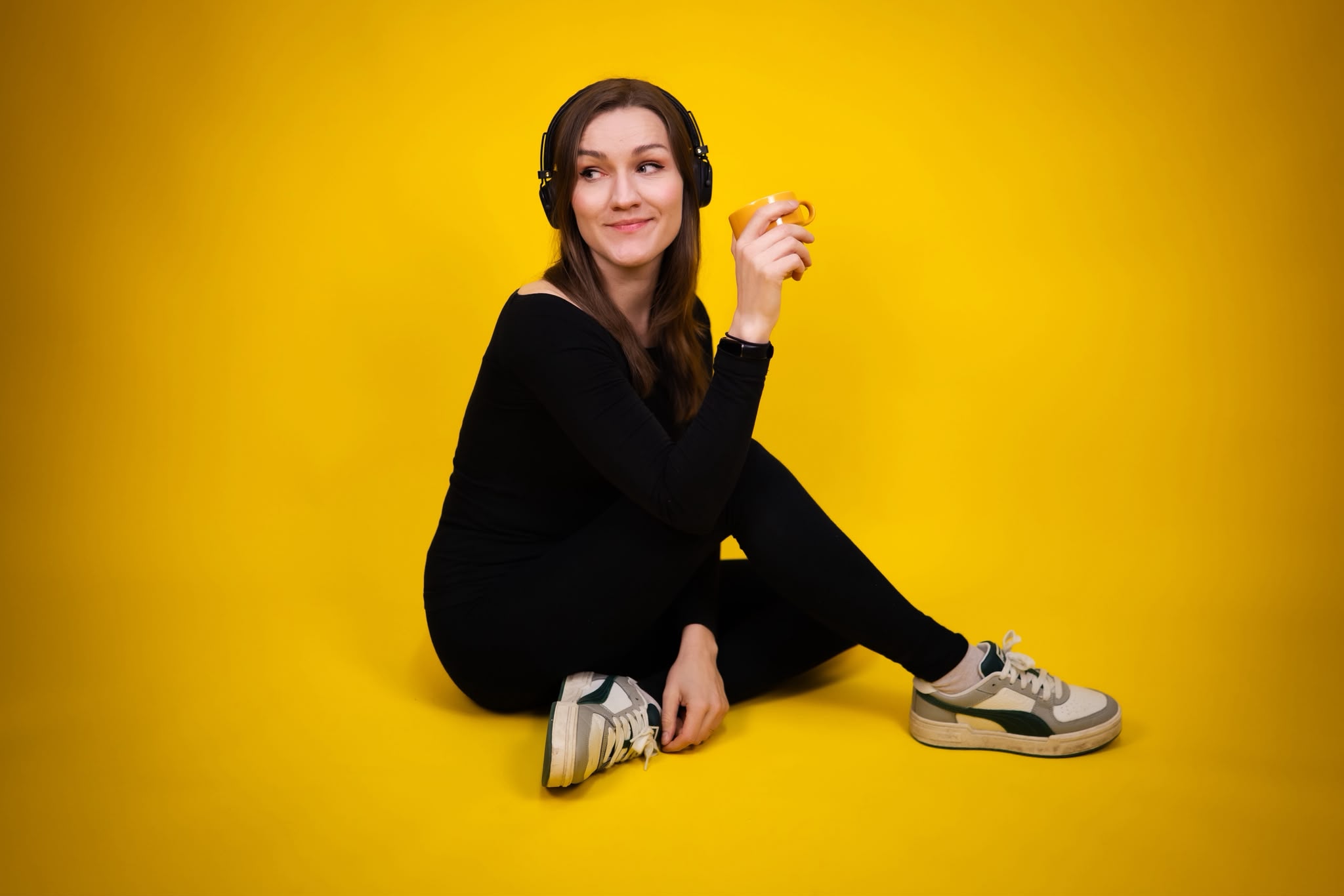
When Eliza and I started working together, she already knew a lot about herself.
She could see her patterns. She could analyse what was happening. She had done therapy, personal development and a lot of thinking. She was intelligent, self-aware and very, very good at trying to find the logical solution to whatever wasn’t working.
The problem was that knowing didn’t necessarily mean she could do differently. There was a constant conflict between what she could understand intellectually and what she was actually able to live. Difficult emotions could become anxiety.
Decisions could turn into nights of overthinking. When something felt uncomfortable, her instinct was to go back into her head and try to solve it.
At one point, she described it simply: “I knew what I was doing. I just couldn’t do better.”
Which makes something she chose as an intention for herself for 2026 feel particularly significant: “Jestem czarodziejką i zamieniam słowa w czyny.” (I am a magician and I turn words into actions.)
Because that is, in many ways, what the next chapter became about. Not learning more words. Learning how to actually live what she already knew.
When we started, the work wasn’t somatic at all
Eliza and I originally started working together around her business. She had built something real and successful, but underneath it was a growing sense that the business she had created wasn’t actually hers anymore. Or perhaps had never completely been hers.
Looking back now, Eliza says she still finds it difficult to feel uncomplicated pride when people compliment what she built. Not because it wasn’t an achievement, but because so much of it felt like she had been playing a role.
As she put it, when people admired the business, there was a feeling of: You’re seeing my mask. You’re not seeing me.
She can hold more complexity around that now. She is proud of herself for building it. She can see what it taught her and what she was capable of creating. She also knows she doesn’t want to live there anymore. And knowing that intellectually was one thing. Actually leaving was another.
The problem wasn’t that Eliza needed another answer
For a long time, Eliza kept returning to her head.
What is the sensible decision? What should I do next? How do I solve this? What is the correct way forward?
Even before we started doing explicitly somatic work together, I kept inviting her out of that constant analysis.
She hated it. 😂 Or, more accurately, she didn’t really understand what I was asking her to do.
Because if you’ve spent your life believing problems are solved by thinking hard enough, “get out of your head” is spectacularly unhelpful advice unless someone can help you discover where else you might go.
And gradually, our work stopped being so much about finding the correct answer and became more about helping Eliza hear the answers that were already there.
Eventually, that meant letting go of the business she had spent years building. She is very clear that she doesn’t think she would have been able to close that chapter in the same way without our work together.
Not because I told her to leave it. I didn’t. What mattered was being able to move towards the decision gently enough that it didn’t become another threat her whole system needed to fight.
And when she finally made it? There was an enormous amount of joy.
Letting go of her business
Because this is not one of those case studies where somebody makes The Big Brave Decision™ and immediately skips into the sunset as a healed woman with excellent boundaries.
Eliza had just let go of something that represented far more than a source of income. Of course her body had opinions.
The difference was what happened next. When anxiety and uncomfortable sensations appeared after the decision, Eliza didn’t immediately interpret them as evidence that she had fucked up. She didn’t spiral into maybe I should go back.
She could recognise that she had made an enormous change and that her body was responding to change.
She describes having a solid ground underneath her. There was no desire to run back to what she jokingly calls her “toxic ex.”
The difficult feelings could be there. And the decision could still be right. That might sound like a small distinction. It isn’t.

Somatic work became the missing piece
Eliza is also very careful about how she talks about what changed. During this period she wasn’t only working with me. She had been in therapy. She was doing other programmes and creative work. Different experiences overlapped and influenced each other and she doesn’t believe she can neatly separate them and say, this one thing caused this one result. Neither do I.
This isn’t a story about me single-handedly transforming somebody’s life. What Eliza can identify is what our work, and particularly the somatic part of it, added.
She had spent years understanding herself through her mind. She knew about emotions, intuition and bodily sensations. But, as she now puts it, she realised she hadn’t really been feeling her body in the way she thought she had.
In our sessions, instead of noticing a sensation and immediately moving back into understanding it, we stayed. We got curious. We followed what was happening. Sometimes that took her into experiences and imagery she hadn’t expected. She remembers being surprised by how deeply we could go and by my ability to notice what was happening with her and keep guiding her without dragging her somewhere she wasn’t ready to go.
For her, somatics became a missing puzzle piece. Suddenly there was a whole source of information available to her that she hadn’t known how to access before.
Her body stopped feeling like something that betrayed her
This might be one of the most important changes Eliza describes. Before, intense sensations could feel frightening. Her body could produce anxiety and discomfort that felt as though it might completely overwhelm her.
Now, there is more agency.
She can notice discomfort without immediately needing to get rid of it. She can recognise when something difficult is moving through her and tell her family what is happening. She can have a hard day without becoming completely swallowed by the hard day.
And instead of experiencing her body as something unpredictable that might betray her, she is increasingly able to see it as something communicating with her. Something she can listen to. Something she can trust.
She knows now that an intense emotion does not automatically mean she is going to fall apart. Her body can experience something difficult. And she can stay.
I'm finally living MY life
“I feel like nothing concrete in my life has changed, and at the same time everything has changed. I did a lot of different work during this time, and I honestly can’t separate it and say one thing changed everything. But the somatic work with Ola felt like a missing puzzle piece. So much of what I had done before happened in my head. With Ola, I experienced a completely different depth of connection with my body.
She helped me move through a huge transition and say goodbye to a business that no longer felt like me, without pushing me or giving me the answers. Even when anxiety came afterwards, I didn’t spiral. I could recognise that my body was responding to change and trust that I would handle it.
I don’t feel like my body is betraying me anymore. I see that it’s giving me signals. There is a trust that my body can handle what comes.
My curiosity has come back. I keep asking myself, ‘What makes life feel alive? How can I live my life so it feels alive?’ I’m doing things for fun again, without needing there to be an outcome and learning myself all over again.
I don’t really have labels for myself right now. I’m me. I’m finally myself. I’m finally living with myself. There are difficult days, but it has never been better.”
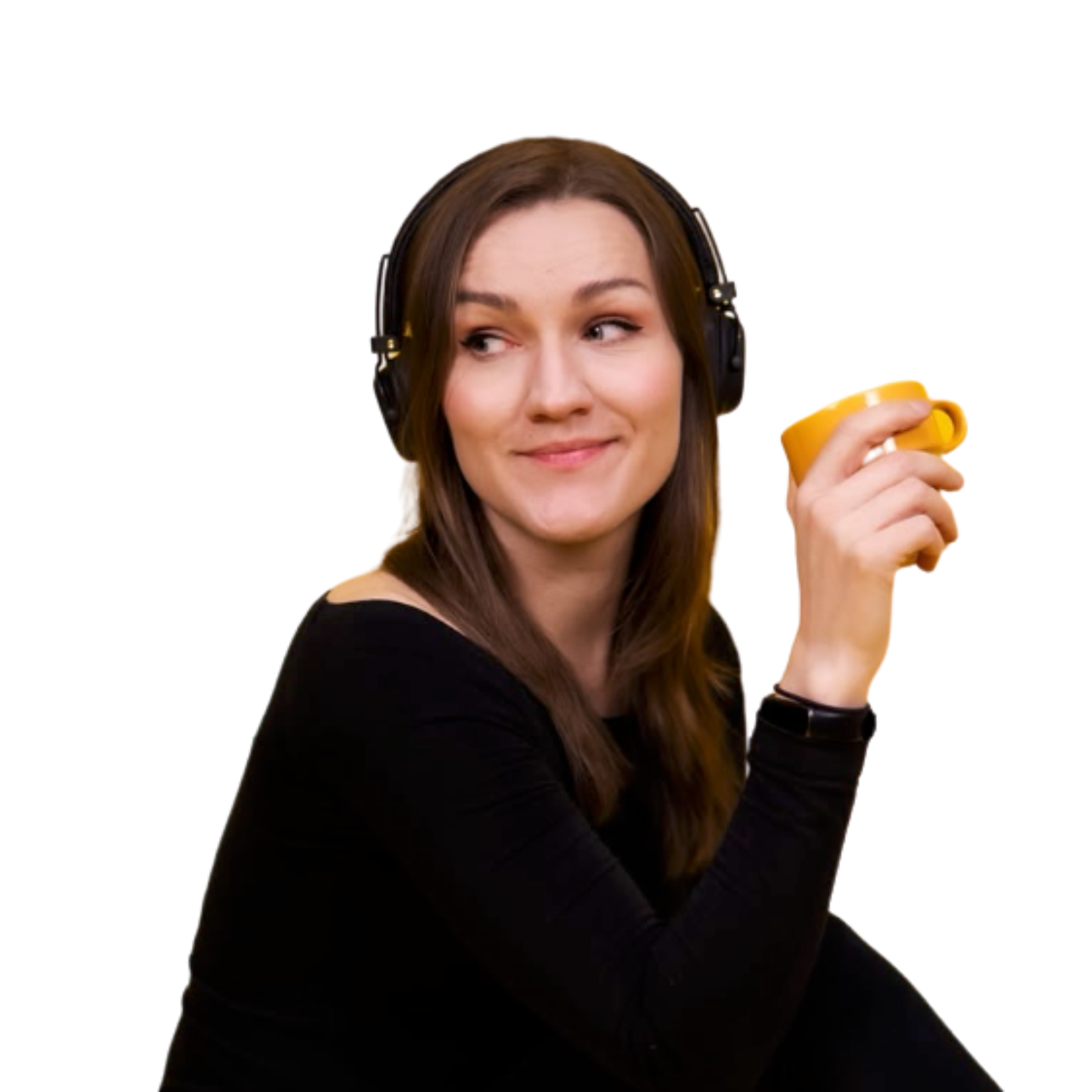
Eliza Corre
So what does “living MY life” actually look like?
This was the question I wanted Eliza to answer because I wanted something tangible. Some lovely neat list of external changes that I could put into a case study and say: LOOK. RESULTS.
Eliza, inconveniently, gave me something much better. 😂 She told me:
"I feel like nothing concrete in my life has changed and at the same time everything has changed.”
There is a curiosity about life again. She finds herself asking: What makes life feel alive? How can I live my life so that it feels alive? She is returning to things she once loved before the world told her they were impractical, illogical or unlikely to make money.
She lets herself do things because they are fun, without immediately requiring them to become productive. She’s exploring creativity again. She signed up for horse riding. She’s learning herself all over again.
And when I asked her to describe who she is now, she struggled. Not because she doesn’t know herself. Because she is less interested in forcing herself into a neat label.
Business owner. Teacher. Whatever professional identity is supposed to make her understandable to everybody else. None of them quite fit. Creative comes closer. Language will probably always be part of her world. She is a mum to, in her words, two dragons.
But perhaps the most accurate answer is simply: She is Eliza. And for the first time, that seems to be enough.
“I’m finally myself”
There’s another part of Eliza’s experience that matters enormously to me. She says she never experienced me as the guru with the answers who was going to heal her. Thank goodness for that.
What she experienced instead was guidance. Someone who could stay with her, notice what was happening, sometimes challenge her and sometimes slow things down, but continually return her to herself.
The message was never: I know what you need. It was: There is something here that you know. Let’s help you hear it.
Eliza says that experience has changed what she now looks for in other people she learns from and works with. She wants cooperation rather than hierarchy. Support that doesn’t create the feeling that somebody else knows her better than she knows herself.
Because perhaps the biggest thing she has regained isn’t certainty. It’s trust.
Trust that she can make a huge decision and survive the feelings that follow.
Trust that discomfort doesn’t automatically mean danger.
Trust that she can listen to her body without being ruled by every sensation.
Trust that she doesn’t need to know exactly who she is becoming before she takes the next step.
And trust that whatever happens next, she will be able to meet it.
From words into actions
I keep coming back to that intention: “I am a magician, and I turn words into actions.”
Because I don’t think Eliza’s story is really about becoming somebody new. It’s almost the opposite.
For years, she had accumulated understanding. She could analyse herself, explain herself, try to improve herself and search for the right answer. Now there is less urgency to turn herself into somebody else.
She is learning who she is again.
She is listening to what makes her feel alive.
She is allowing creativity to matter even when it doesn’t have an obvious outcome.
She has walked away from something that no longer felt like hers without needing to know exactly what will replace it.
There are still difficult days. There are still big emotions. There is still uncertainty. But as Eliza told me, in essence:
I don’t have a label for myself. I’m me. I’m finally myself. I’m finally living with myself. And even though that comes with difficult days, it has never been better.
Maybe turning words into actions was never about finally becoming disciplined enough to do everything she knew she should do. Maybe it was about trusting herself enough to finally live what she already knew was true.
You don’t need someone else to have the answers for you
One of the things I love most about Eliza’s story is that our work wasn’t about me telling her what to do next. It was about helping her get underneath all the analysing, fixing and searching for the “right” answer, and build enough connection with herself and her body to trust what was already there.
That’s a huge part of how I work. I bring somatic and nervous system coaching alongside years of experience with business, identity, neurodivergence and the messy reality of being an ambitious human with an actual life. I’m not here to become another guru you hand your decisions over to. I’m here to help you understand yourself more deeply, stay with what feels difficult and build the capacity to make changes that actually feel like yours.
If you’re at a point where something needs to change, but you don’t need another person telling you what you should do, book a 1:1 Exploration Call and let’s talk.
Copyright © 2026 Ola Kowalska Coaching. All rights reserved.